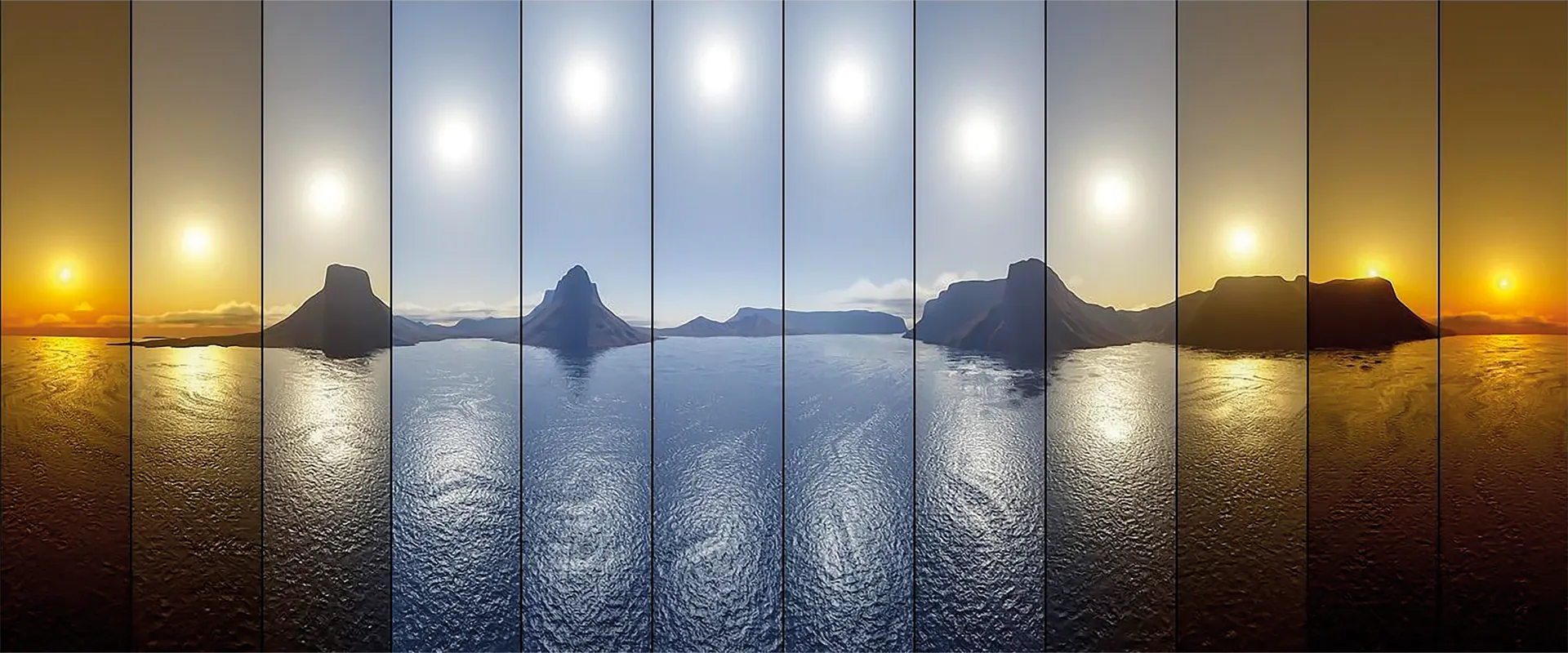
What are the consequences for the body? Lack of daylight during the day tends to change the functioning of the internal clock and alter the phases of sleep and wakefulness to a greater or lesser extent with a negative effect on chronobiological rhythms and, in extreme cases, cause health problems.

The effect of lighting on humans
In recent years there has been a focus on the need to reduce energy consumption in buildings and the resulting emissions of pollutant and climate-altering gases.
For this reason, the revolution caused by the advent of LED sources has been appreciated above all from the point of view of the gain in energy efficiency; less attention has been paid to the great potential for control and new applications that this technology offers.
Light and the internal clock
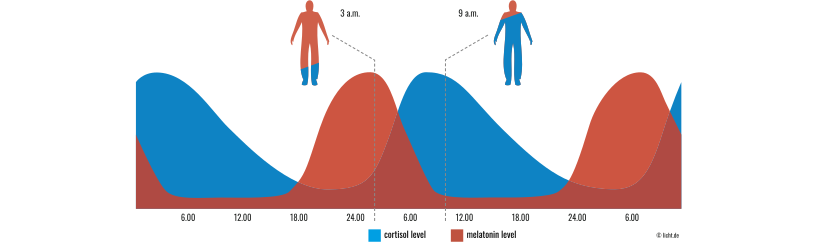
To this end, the body naturally produces hormones such as cortisol and melatonin, which are counter-cyclical. Early in the morning, the production of cortisol - also known as the 'stress hormone' - begins, which has a stimulating effect on many functions in the body and promotes awakening, activation and concentration. Without an increase in cortisol levels, it would be difficult to get up in the morning and much more difficult to carry out daily activities. After peaking around 9 a.m., its level in the blood steadily decreases throughout the day.
Melatonin production, on the other hand, begins in the late afternoon. Known as the 'sleep hormone', it slows down the body's functions and lowers activity levels to facilitate sleep. Melatonin levels are already high at midnight and reach their peak around 3am; the first light of day stops their production.
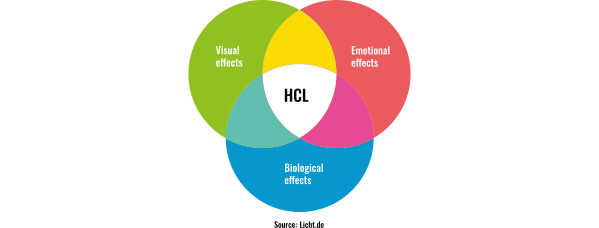
The answer: HCL lighting control
This is the revolutionary concept of HCL or Human Centric Lighting: providing high-quality light in the required quantity at all times, while always focusing on the individual needs and well-being of people.
- light sources adjustable in intensity and with the possibility of varying the shade of white light emitted;
- an intelligent control system to support the function;
- luminaires with light emission over a wide area, possibly with direct and indirect components.
LED sources have made this much easier than in the past: they are able to emit different shades of white light and the intensity of their output can be easily controlled by digital systems. In addition, more and more luminaires have versions with independently switchable direct and indirect light components. In this way, over the course of the day, it is possible to gradually vary the colour temperature from cold white in the morning to neutral tones closer to daylight in the evening - this allows the colour temperature to gradually change from cool white in the morning to neutral tones closer to daylight in the middle of the day - and then to warm white in the evening, while at the same time reducing the emitted intensity and making greater use of the indirect component.
This management of artificial light has a positive biological effect, as it tends to stabilise the day-night rhythm of human beings.
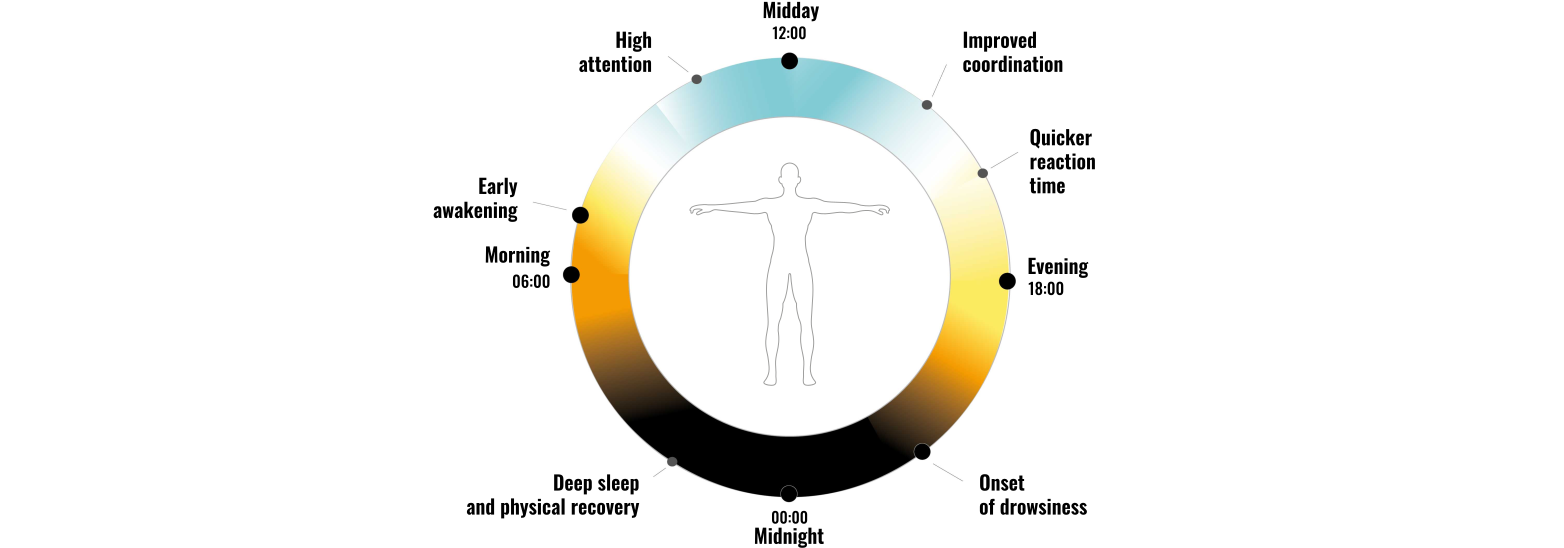
A few examples? At home, people often get up when the alarm clock goes off at a time that does not correspond exactly to their individual rhythm. For a more natural and less traumatic awakening, a gradual increase in artificial light can be envisaged. When moving to the kitchen to have breakfast, increased brightness and a colour tone closer to natural light - with a high blue light component - stimulates and has an activating effect on the body; at the same time wall-mounted luminaires are also switched on for a more even distribution of brightness.
In the workplace, light supports people's visual tasks to the best of its ability; correct illuminance and glare-free light as prescribed by legislation are essential prerequisites, but a white light colour with a tendency to cool helps to maintain cognitive performance and concentration over a longer period of time.
More productivity at work by following the circadian rhythm
A section of the offices was equipped with a biodynamic lighting control system and a research team, coordinated by the University of Twente, studied the reactions of 120 people over a seven-month period.
The lighting control was set up to mimic the natural light patterns of the sun in order to support the body's circadian rhythm: cooler light tones in the middle of the day to stimulate attention and concentration and warmer light tones at the end of the afternoon to promote relaxation at the end of the working day. The results of the study exceeded all expectations and confirmed that light has a great impact on people's well-being and performance: after just one month, 71% of participants felt more energetic, 76% happier and 50% healthier; productivity increased by 12%.
(source: www.cbre.com).
| Impact | Definitions | Examples | |
| Feeling | Mood | Emotional state describing the positive or negative disposition that is influenced by personality traits, sleep, (social) context and behaviour | Affective state, depression prevention, anxiety prevention |
| Energy | Bringing the body and mind into a state of general wakefulness and activity readiness | Reduced activation level, reduced stress | |
| Relax | The emotional state of reduced tension and emotional pressure, while feeling at ease | Increased concentration, vigilance, accident and error prevention | |
| Operativity | Attention spam | The state of active attention due to high sensory awareness | Improvement of memory, learning, creativity, motivation |
| Focus | Mental performance including working memory, language production and comprehension, learning, reasoning, problem solving, complex response, decision making | Improvement of memory, learning, creativity, motivation | |
| Health | Sleep/wake cycle | A stable 24-hour rhythm of rest and activity, controlled by an individual's biological clock, is essential for optimised functioning during the day and for a good night's rest to promote sound health. | Disease/disorder prevention, treatment and mitigation (dementia, SAD, ADHD, schizophrenia, sleep disorders), social jetlag, chronomedication, improved healing environments |
1. ADHD: Attention Deficit Hyperactivity Disorder, SAD: Seasonal Affective Disorder, DSPD: Delayed Sleep-Phase Disorder - Source: WG Light for Life, A.T. Kearney